Abstract
Organizations frequently fail to sustain transformation despite substantial investment in leadership development, cultural change programs, and structural redesign. Existing frameworks tend to treat organizational stability as passive inertia rather than as an actively and recursively reproduced dynamic state.
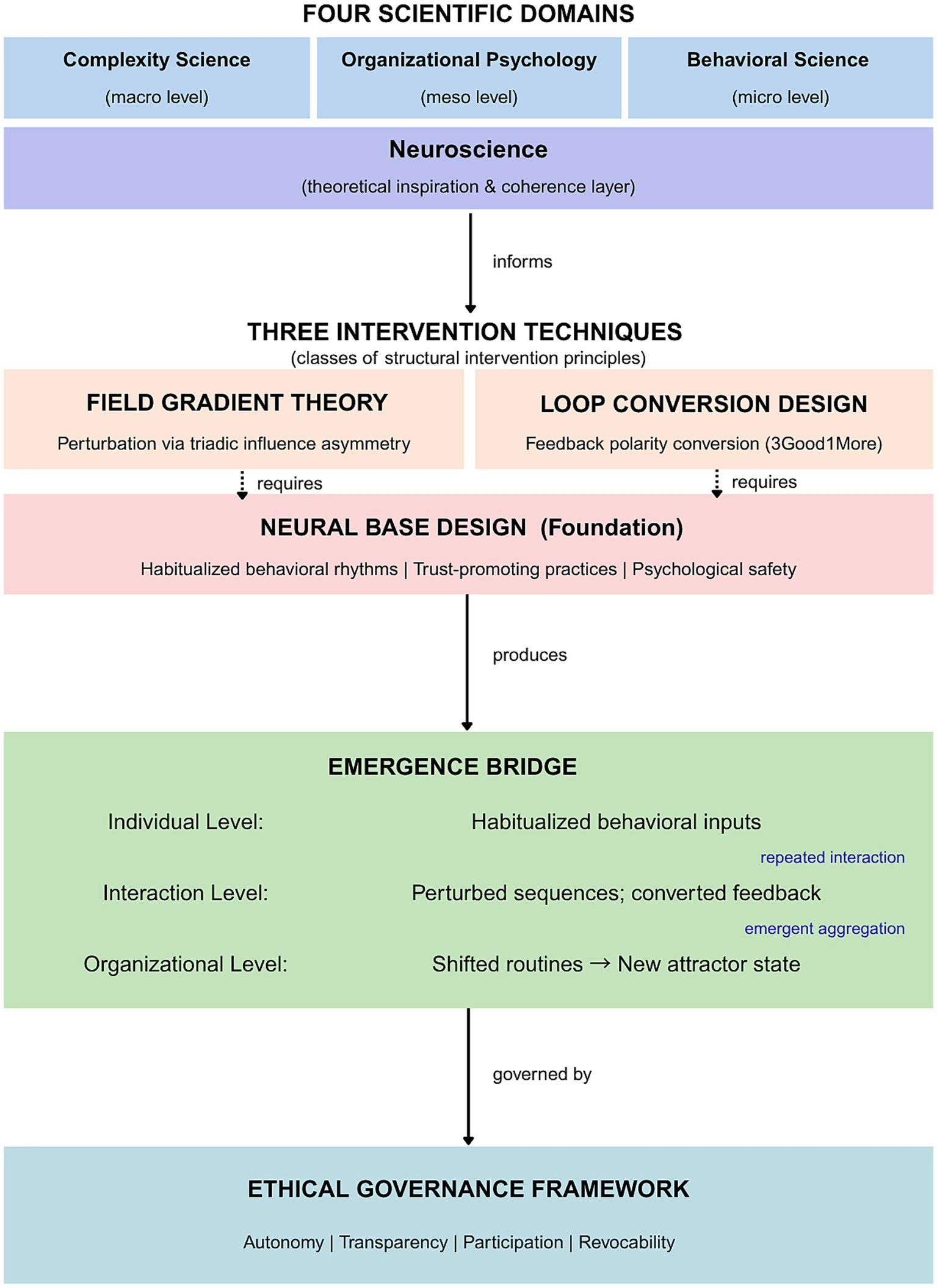
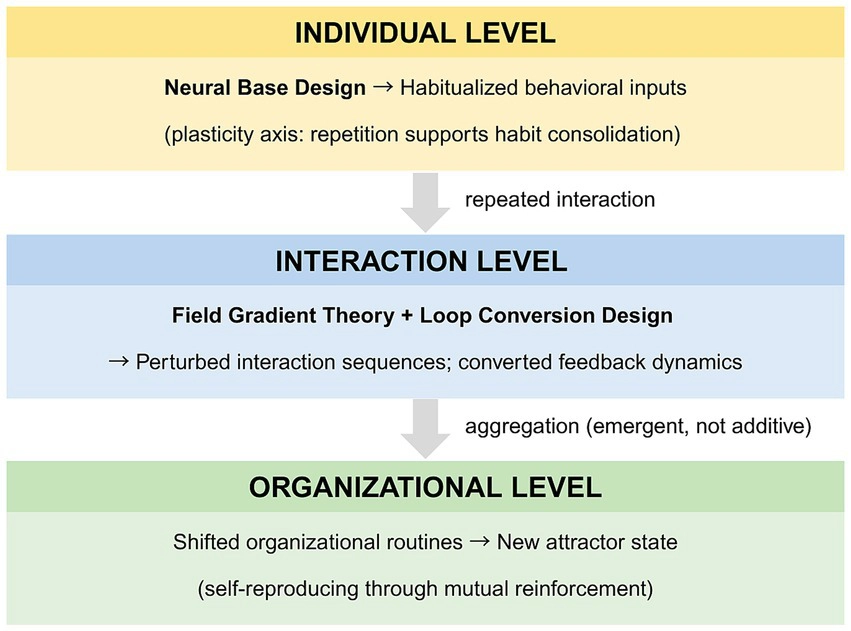
This paper introduces Clinical Organizational Science (COS), an integrative framework that addresses this gap by specifying the structural mechanisms through which organizational stability is generated and through which durable transformation can be induced. Drawing on complexity science, neuroscience, organizational psychology, and behavioral science, COS proposes a multilevel mechanistic account—the emergence bridge—connecting individual behavioral habituation to organizational-level attractor transition.
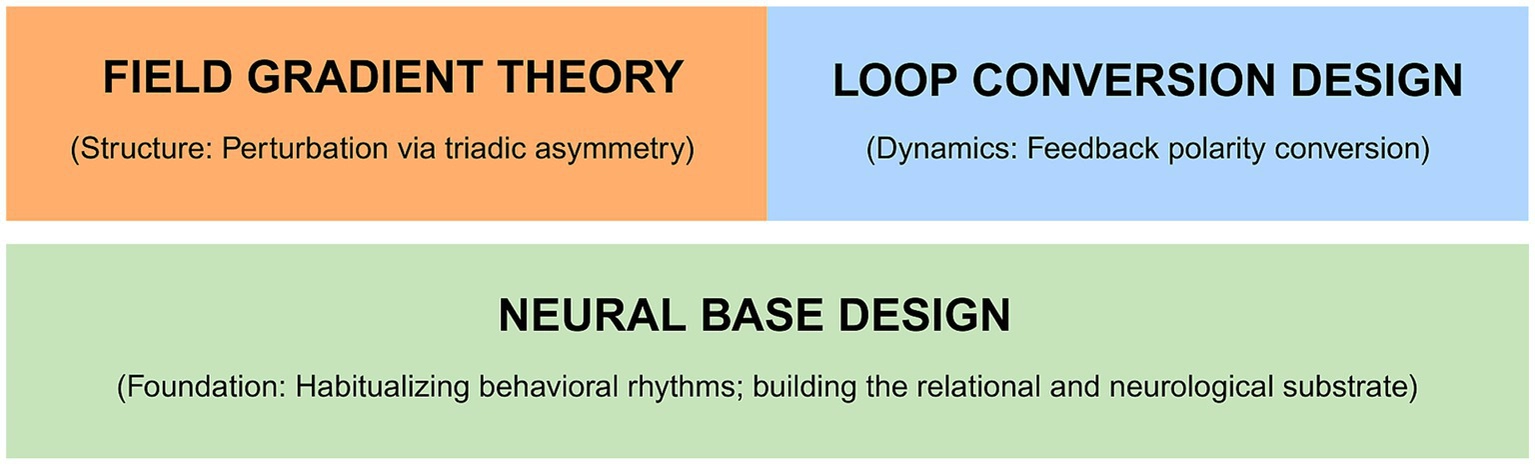
Three structured intervention techniques are presented—Field Gradient Theory, Loop Conversion Design, and Neural Base Design—each operationalizing a distinct structural mechanism with specified theoretical foundations and failure conditions. Illustrative patterns consistent with the framework's theoretical predictions are discussed across behavioral, relational, and organizational levels, with explicit acknowledgment of their conceptual rather than evidentiary status. An ethics framework governing neuroscience-informed organizational intervention is also proposed.
COS offers a theoretically grounded conceptual framework that repositions organizational transformation from a behavioral change project to a structural intervention problem, accompanied by testable propositions and directions for independent empirical investigation.
Keywords
Clinical Organizational Science · organizational change · organizational transformation · psychological safety · organizational development · organizational intervention · structural intervention · complex adaptive systems
Publication Information
| Journal | Frontiers in Psychology |
| Section | Organizational Psychology |
| Volume | 17 (2026) |
| Article Type | Conceptual Analysis |
| DOI | 10.3389/fpsyg.2026.1827324 |
| Accepted | April 15, 2026 |
| Reviewers | Three anonymous reviewers |
| License | CC BY 4.0 (Open Access) |
| Word Count (main text) | 7,642 |
| Figures / Tables | 3 / 1 |
Author Note
Correspondence concerning this article should be addressed to Makoto Yamanaka, DroR Corporation, Tokyo, Japan. Email: research@dror.co.jp
Author Contributions
Both authors contributed to the development of the Clinical Organizational Science framework. Makoto Yamanaka led the primary intellectual development of the framework and intervention techniques. Masaya Nakamori led the drafting of the manuscript and contributed to theoretical elaboration, academic writing, and critical revision. Both authors reviewed and approved the final version.
Conflict of Interest
This paper presents a framework developed through practice at DroR Corporation. Both authors are organizational practitioners at DroR, and the conceptual illustrations in Section 4 were developed by the same practitioners who designed the framework. This constitutes a structural conflict of interest that is addressed through explicit acknowledgment throughout the paper and through the transparency and revocability principles of the ethical governance framework presented in Section 5.
Read in Other Languages
A Japanese-language summary and commentary on this paper is available.
Cite This Paper
APA
Yamanaka, M., & Nakamori, M. (2026). Clinical Organizational Science: An Integrative Framework for Structural Intervention in Complex Organizations. Frontiers in Psychology, 17. https://doi.org/10.3389/fpsyg.2026.1827324
Full citation formats (BibTeX, RIS, EndNote)